
Just a few weeks after being sentenced to prison for allegedly aiding the Turkish insurgent group Kurdistan Workers’ Party (PKK), recently dissolved, Berdan Öztürk gives an interview to Descifrando la Guerra to discuss the Kurdish–Turkish peace process, the country’s internal political situation, and regional dynamics in the Middle East.
Berdan Öztürk is a member of parliament in Turkey. After his time in the Peoples’ Democratic Party (HDP), he currently serves as head of the Foreign Relations Commission of the Peoples’ Equality and Democracy Party (DEM), a party that acts as the legal successor to the HDP following what its members describe as persecution against the organization.
[Alejandro López] I’ve been following the situation inside Turkey and recently there was a sentence that imposed you a six-year prison term. Do you have any legal procedures to avoid that decision? Are you going to face arrest?
We have the right to appeal to a higher court. This application is being prepared by my lawyers and it’s going to take time, of course. I don’t have an immediate problem right now but they lifted our parliamentary immunity. In 2016 I was a member of parliament as well.
Then a case was opened against me, and now they have made this decision. This is a normal investigation in Turkey, because Turkey has not been respectful of the rule of law for a long time.
[A.L] Do you have confidence in justice in Turkey?
No, I don’t have any confidence in justice in Turkey, because the judiciary is under the control of the government. Whatever Mr. Erdoğan says, they just obey. So all the decisions regarding our political party are politically motivated decisions and judgments.
[A.L] Did you go to the hearing?
I gave my statement to the court. They asked me some questions in regard to the case, but I told them: “You don’t have the right to carry on this trial. Whatever I said, I stand by it now as well, because I am a politician. It is my right and my duty to share my opinions with the public. If you are willing to sentence me for this, then go on and give your judgment”. That was basically my statement [to the court].
[A.L] Why do you think they gave this verdict?
There are many other verdicts as well; it’s not just about me. Many of our comrades are in prison. As I said, these decisions and judgments are politically motivated. They are related to the political environment in Turkey at the time these cases were opened against us.
As DEM party members, we have been defending people’s rights, the value of democracy, human rights, and the rule of law. We still do this. The judiciary is not free from the influence of the state and the government. But as I said, with the peace process, hopefully things will change and we will take steps towards democracy, the rule of law and human rights.
[A.L] What did the court mean by accusing you of “helping terrorism” or doing propaganda?
[B.Ö] They took many speeches that I gave some years ago, put them all together and created a single case against me. Not as a “member” of a terrorist organization, but “helping” a terrorist organization.
You can’t find a law like this in any other country. It’s ridiculous. We should be aware of something regarding the peace process: there are many people, both internally and externally, who do not want the peace process to move forward.
These court members know that a process has started in Turkey. They know that if they make this judgment it is not the right decision in relation to that process, but still they carry on. Many people in state institutions in Turkey do not want the state and Mr. Erdoğan to find a peaceful solution to Kurdish issue.
These are not decisions made according to the rule of law; they are political judgements. Hopefully the High Court will overturn them. But if not, we are ready to go to prison as well. That is not a problem for us.
[A.L] Are they linking you directly to PKK?
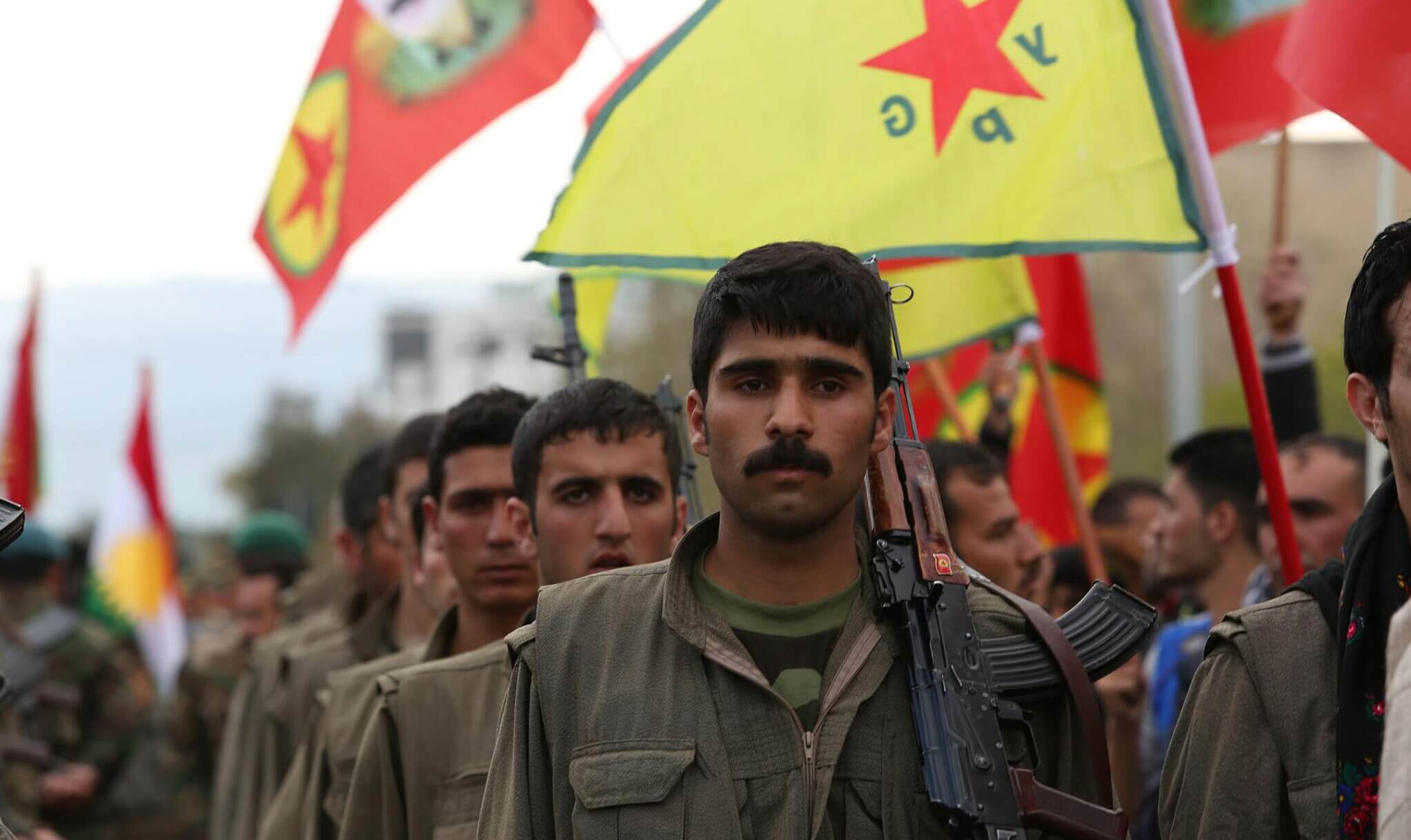
[B.Ö] Of course. They link my speeches to PKK propaganda. I have said many times that there is only one solution for Kurdish issue: you have to go and meet with Mr. [Abdullah] Öcalan. You have to see this reality.
As DEM party, there are things we must do, of course, but he is the leader of a movement. Millions of people say, “his will is our will.” That is very important.
And I have said many times that the only solution is to open the way to İmralı [prison where Öcalan is held], to open the way to Mr. Öcalan and negotiate. The call on PKK he made during the peace process was a historical moment. After 26 years on an island under heavy isolation, when he had the opportunity to speak, he used it to call for peace.
[A.L] So how do you assess the dissolution or disarmament of the PKK if the state of Turkey is also persecuting the political and institutional way of the Kurdish struggle?
[B.Ö] As I said, this is an old case. You can’t change everything in one day. It takes time. Some judges, some police officers, some high-ranking officers do not want the peace process to move on. They are against it.
We knew this judgement was not in the best interest of Turkey’s future. There were many criticisms of the court’s decisions. That is why things need to be changed and moved forward. This is the basic reason for our struggle. We will see decisions like this in the future as well; it will not end with me. It didn’t start with me and it will not end with me.
Not everyone supports the peace process in Turkey. There are many factions and institutions; judiciary is one of them. But this is not going to affect our determination regarding the peace process.
[A.L] Now the ruling party AKP and even their ultranationalist partner in MHP, Devlet Bahçeli are backing the idea of visits to İmralı prison to talk to Öcalan. How do you assess this process?
[B.Ö] Let me explain something about the process. As you know, it started with the support of Devlet Bahçeli. He is the leader of an ultranationalist party, but he is also a representative of the “deep state” in Turkey. We know him and his posture very well.
We remember 1999, when Turkey abolished the death sentence, his statement and support were crucial. And in the next elections his party didn’t pass the threshold. When the benefit of the state and his party are at stake, he always has chosen the benefit of the state. So we were shocked as well when he called for Öcalan to come to the Turkish parliament.
This shows that it was not merely Bahçeli’s decision himself. He did not just wake up one morning and say, “Let’s start a new peace process with Öcalan.” It was a decision of the state.
Why does the state need something like this now? For the last ten years the state and the government have tried everything imaginable against us. They were planning to get results in a short time, but it didn’t work.
Whenever our people found a way to express themselves—especially through elections—they went to the polls and told the state and the government: “We are still here.” The first time AKP and Erdoğan lost power was in 2015, when HDP passed the 10% threshold.
The second time was the local elections, when they lost Istanbul and many other cities. If you lose Istanbul, you lose the power again. Who made Erdoğan lose power? The Kurds did. Without support from HDP voters, it would have been impossible for Ekrem İmamoğlu to win Istanbul.
So they understand they need someone: they need the Kurds. After many years without getting the result they wanted, they have only one option left if they do not want Turkey to face a fate like Syria or Iraq: they have to act, open a path for a peaceful solution, and avoid a future disaster regarding the Kurdish question. That is the reality the state sees. That’s why Bahçeli made such a speech.
[A.L] Do you think a future accord between the deep state in Turkey and Abdullah Öcalan could be beneficial for the Kurdish people?
[B.Ö] When the state made this statement through Bahçeli, they understood something else too: they must change the system and the regime that has been in place for 100 years.
Look at Syria. Assad ignored the will of the Syrian people to have democracy, the rule of law and freedom. That’s why the war started. The situations in Syria, Iraq, Iran and Turkey are intertwined. The regimes are not so different from each other. They all have to change.
The idea of the state formed in the 1920s doesn’t work anymore. The state understands this as well. Without changing itself, it cannot move forward. That’s why they realized and took this step.
[A.L] Do you consider Turkey today a real democracy?
[B.Ö] No. We cannot talk about real democracy in Turkey. Yes, formally we have democracy and elections. If you see elections alone as the only indication of democracy, then Iran is also a “republic”. There are elections there too.
We are trying to build democracy together in Turkey. The Kurdish question and democracy are interlinked. If you take steps towards democracy, you also take steps towards solving the Kurdish issue. That’s why we are trying to build a new Turkey where democracy, the rule of law and a solution to the Kurdish issue go together. We are going to build a real democracy.
[A.L] But together with whom?
[B.Ö] Together with everyone.
[A.L] Do you have confidence in CHP, the Republican People’s Party?
[B.Ö] We have confidence in ourselves. We need everyone. If we are going to live together and rebuild a bright future for Turkey, then we have to work together. We don’t have any other options. The other options have been exhausted; they haven’t worked at all.
That’s why we are trying to turn a new page. When we turn this new page, we have to learn from the past. We have learned from past practices, and we shouldn’t repeat them. This is very important for CHP and all political parties, unions, women’s and youth movements, everyone.
Everyone should be able to say what they think and have the right to speak, especially on Kurdish issues, democracy, the rule of law and human rights. We all owe that to each other.
[A.L] Which are your main objectives in the Kurdish regions, for you and for your people, the Kurdish people?
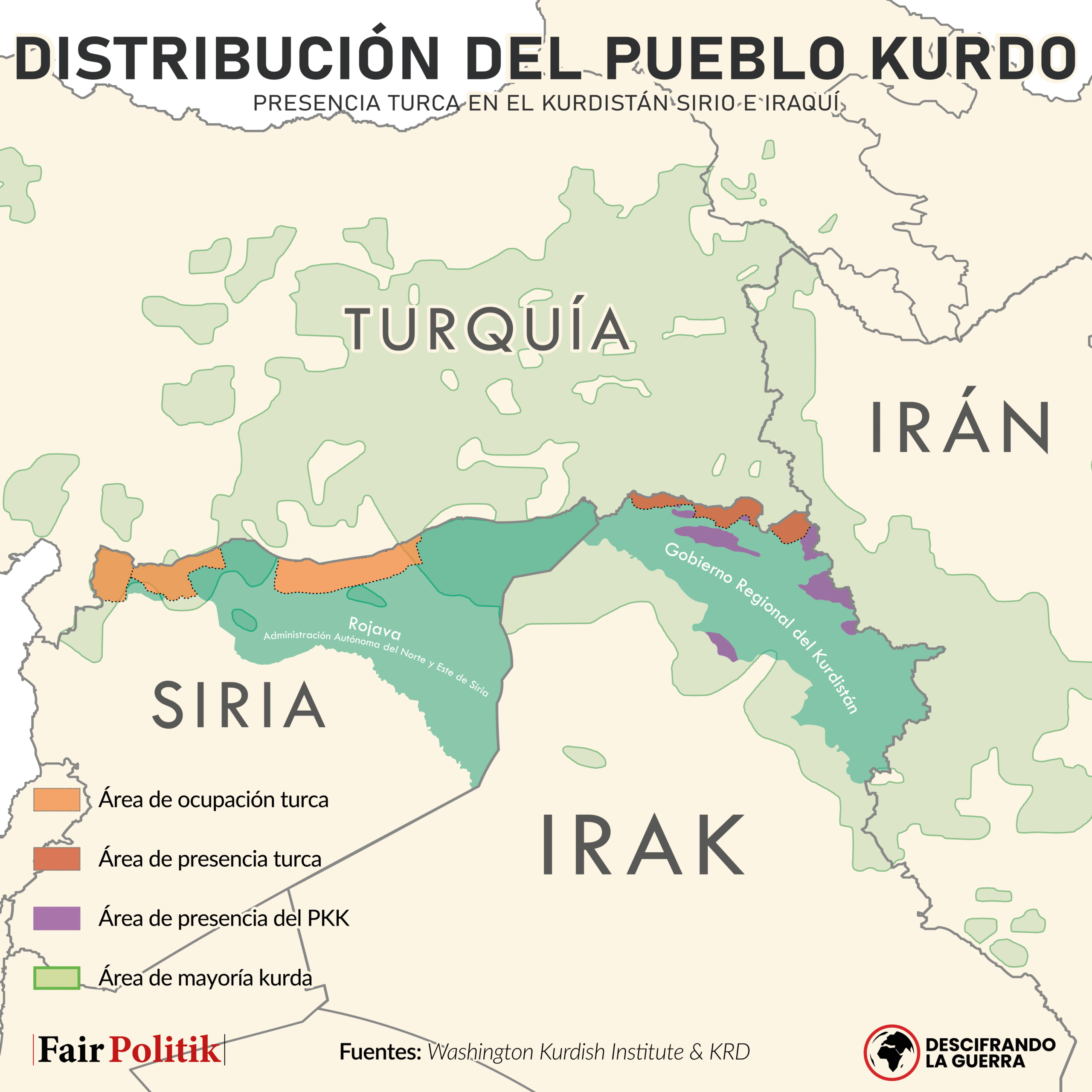
[B.Ö] We want to live on an equal basis. Equality is very important. Of course we want our identity to be recognized as a nation. We have our language; we have different languages, cultures, music and traditional outfits.
We expect others to respect our nationality. It’s very important. But we also live as citizens of Turkey, together with other diversities in Turkey, on an equal basis. That is our main goal.
[A.L] Must that be done through a federal state?
[B.Ö] We don’t necessarily have to name it in a specific way, but we know one thing for sure: this centralization of power does not work. We need to share power with local authorities, with locally elected representatives. We have to share it.
Decentralizing power is very important and will make us move forward. It’s vital for the future of all of us in Turkey. That’s why we talk about autonomy or decentralization—whatever you call it. We will remain citizens of Turkey, but decentralizing power will be very helpful. And this is not only related to the Kurdish issue. Centralizing power leads to dictatorship, authoritarian regimes. That’s why we have to share it.
[A.L] Do you have confidence in CHP as a helpful party for that goal?
[B.Ö] CHP is at a crossroads. They have to decide what kind of Turkey they want. This decision must be made by CHP. But CHP and other political parties in Turkey must clearly see one thing: you cannot build a future by repeating past mistakes.
When everything around you are changing, you have to change yourself as well. That’s the only way. The step taken by Mr. Öcalan is a big opportunity for Turkey, for rebuilding the country together.
[A.L] But CHP made deals with nationalist parties in Turkey, like the Good Party (IYI) or the Victory Party, in the last elections.
[B.Ö] Those were tactical moves for the last elections. Tactics can be changed. Today we hear ultranationalist party leaders saying, “I am ready to do everything for the peace process to continue. If you want a solution to the Kurdish issue, you can have me as well. I am ready for that.”
But as I said, what we are talking about now is not elections. When we talk about the Kurdish issue, it is above everything, above short-term political gains. It is about how we are going to live together in this country.
[A.L] Yes, but they are supporting a unitary national state. Are Kurdish people really included in this project that CHP is building with nationalist parties?
[B.Ö] What I’m trying to say is that if other parties insist on seeing everything through the lens of the past, it’s not going to work. We can work together now, but we must change this. This applies to CHP and to all other political parties.
You are nationalist and defend whatever ideas you want, but when it comes to the question of Kurdish people and their rights, you have to change your stance. Wherever you are standing, you must be ready to change it.
[A.L] Yes, but these nationalist parties want to isolate DEM party, and yet their percentage of votes was decisive for Erdoğan victory last time.
[B.Ö] Look at the percentage they are getting; it’s not that high. They are trying to benefit from the situation. Maybe it looked decisive last time, but it wasn’t truly decisive. We are talking about elections.
For example, in the last presidential election, Erdoğan was re-elected because they didn’t clearly support [Kemal] Kılıçdaroğlu. They sat at the same table, but they didn’t call on their voters clearly to support him.
But as I said, whoever opposes the peace process—regardless of their name or ideology—will have to answer not to DEM party, but to the Turkish people in the future.
If you say that the peace process is a betrayal of the Turkish state and Turkish values, then you have to offer an alternative. If you don’t offer an alternative, it means you want the conflict to go on.
You sit in parliament, speak on behalf of people and tell them to go and die. Die for what? That is the question they need to answer to the Kurdish people and to the Turkish people as well.
[A.L] I ask these questions because you, as the opposition, are trying to build an alternative to the ruling coalition. In the last election, some nationalists like Sinan Oğan supported Erdoğan, but the opposition literally supported “the practice of appointing state officials instead of local administrators whose links with terrorism are proven by legal evidence of judicial decisions”.
Is that democracy assisted by the opposition?
[B.Ö] Let me give you an example. In 2016 after the coup attempt, the ruling party AKP proposed a constitutional change regarding our parliamentary immunity. This change was made for us.
Kemal Kılıçdaroğlu, the leader of CHP at the time, said on TV: “We know that this constitutional change is against the law and against the Constitution. But we are going to say yes to this change.”
Then they lifted our immunity. Many of our friends, including our co-chairs, went to prison. What I’m trying to say is that at that time this decision was taken, and after that there were many appointments of state trustees.
The trustee system did not start with CHP municipalities; it started with us. They didn’t say anything about it. Now the situation is different. We used to tell CHP members: “Your turn will come. You have to speak out right now if you really value democracy. If you really value the basic principles of democracy, you must speak out.” They didn’t. They thought they would control the state and then they would not be touched.
Now the situation has changed. There is no rule of law, no respect for human rights, no freedom of expression in Turkey. That’s why we are trying to tell CHP and other political parties: the main excuse used by all governments, including previous ones, not just Erdoğan, is the Kurdish issue as a safe boat for their rule.
Whatever happens in Turkey, they need something to blame; it has always been the Kurdish issue. Now we have to change this together. This state, this country, cannot move like this anymore.
A hundred years ago, the situation and environment were different. Nation-states were popular. The Ottoman Empire lost many lands and [Mustafa Kemal] Atatürk wanted to protect the last remaining territory. We understand that, even if we don’t agree with building a state on the denial of different peoples.
Today everything has changed—not only in Turkey but in the region and the world. You have to change as well. You cannot imagine that an image from 100 years ago can still work now. It will create many problems.
After the disarmament of the PKK, after the weapons are burned, a path will open to decide what kind of Turkey we want. The question is very clear. But let me repeat you cannot build a future for Turkey by repeating past mistakes or insisting on the ideology that founded this country. We have to change it.
[A.L] Do you think HDP —now DEM party— made the right decision in supporting Kılıçdaroğlu [CHP candidate in 2023]?
[B.Ö] Yes, of course. It was of strategic importance. It was not just about supporting Kemal Kılıçdaroğlu. Our aim was to send a message to the state, the government and everyone: “If you want one single thing to change in this country, you cannot do it without the Kurdish people”. It was both a strategic decision for us and a clear message to everyone.
After all the politically motivated operations, imprisonments and detentions, we are still here. Without us, you cannot stay in power and you cannot change the political situation in Turkey. We have the power now.
This was the message we sent to the central government as well. That is one of the reasons, as I said, why immediately after the elections Devlet Bahçeli made that speech: if you are going to change things in Turkey, you must take DEM party and its supporters into account.
[A.L] So you think DEM must do it again —support the main opposition candidate in the future, even if it’s Mansur Yavaş [Mayor of Ankara]?
[B.Ö] No, we are not going automatically to support them. I believe we’ve been very clear: we will have our own candidate. We can ask other political parties to support us. We don’t have to always support opposition candidates. We are the third biggest political force in Turkey, after AKP and CHP. We might have our own candidate.
[A.L] I mean in a second round of a presidential election…
[B.Ö] In a second round, of course, we would need to talk, but we have to see the situation and how the peace process is going. Many things can happen in three years in a country like Turkey. Everything can change in a second, as in the Middle East.
Many of our parties were shut down; the last case, against HDP, is still pending for decision in front of the Constitutional Court. The main principles we have defended are democratic opposition in Turkey, respect for human rights and the rule of law, and a peaceful solution to the Kurdish issue. Whoever supports these principles for improving democracy and human rights, we will fight side by side with them.
You cannot change your principles according to the political atmosphere. That’s impossible. So I cannot say now what will happen, but as I said, we may have our own candidate and CHP may have theirs. We don’t have to follow CHP or any other political party. At that time it was necessary to send a message to citizens and to the government: we are still here.
[A.L] So does DEM party just want self-government for Kurdish areas?
[B.Ö] No, what I’m saying is decentralization of power. You cannot bring all power to the center and then talk about democracy; it’s impossible. We see it in Europe as well. If you talk about the European Union, it is bigger than any single state. There are no internal borders in the old sense; you are a citizen of Europe. That’s very inspiring.
We have to share power with local authorities, through local elections, not only in Kurdish areas but in all regions of Turkey. Decentralization is for Turkey as a whole. We don’t want any special treatment from the state or the government. As I said, we want equal treatment for us and for all diversities living in Turkey—whether religious, ideological or ethnic. It doesn’t matter. We want equality.
[A.L] Do you prefer building a Turkey where you can live together or getting independence anytime?
[B.Ö] Can you imagine the biggest Kurdish city? The biggest one. You would say Diyarbakir. But it’s not Diyarbakir. Now the biggest city where Kurdish population live is Istanbul. How can you say that we are going to separate or get independence?
[A.L] So you reject independence.
[B.Ö] Listen, that decision is another thing. We are neighbors. Of course, the right to self-determination exists; our people have the right to decide. But we know very well that in a region like the Middle East, if you declare independence, it is not easy to survive. Regimes rise and fall, but nothing really changes.
We have to change that. There is an alternative to this system based on centralized power. We have our communities; we can live together; we can rule together. In Northern Syria, since 2011 people have shown they can live together, respect each other’s rights and religions.
That’s great. Let’s think of the whole Middle East, all countries in the region, including Turkey. I am not Turkish. Do not impose on me an identity or ethnicity that I am not. That is very clear. What should we do? We can live together by democratizing Turkey and solving our problems together. We are not out of options.
[A.L] Regarding the survival you said that you need in Middle East, in that new regime you want to build, Turkey has to be under NATO membership. Is NATO membership necessary?
[B.Ö] This is our opinion regarding NATO, and it is very clear. For security reasons, European countries saw NATO as a savior, but it is not like that. NATO’s existence has caused many troubles around the world.
Look at Ukraine. The war in Ukraine is not only between Russia and Ukraine. Everyone knows that. On one side, you have Russia and other countries that supports them; on the other side, you have NATO countries. And who is dying? Ukrainian people.
They have the right to defend their land, but I’m trying to say something else: NATO as an organization has not done anything good for people, human beings, humanity. It creates an environment where everyone says, “We must prepare, we must increase our contributions to NATO, we have to spend more on armaments.” For what?
[A.L] Do you think the relationship between Turkey and the United States and the European Union should be different? And what about Turkish membership in the EU?
[B.Ö] Turkey has been backsliding from democracy and from European Union values. Not only EU values, but many human values that led to the creation of the European Union, the Council of Europe and similar institutions. These institutions were formed as lessons from history.
The EU is very important, especially in this period, when we face big risks for the future. Turkey has to turn its face to the European Union again. The values that the EU represents are very important.
About the US and other countries: we are open to friendly relations with all, but we all know the Cold War context of NATO’s creation. The Council of Europe and the EU are different. Turkey is a founding member of the Council of Europe. Turkey should also be in the EU, but there are conditions that Turkey must fulfill to become a member. We support Turkey becoming a member of these organizations.
[A.L] I see you make a difference between the European Union and NATO.
[B.Ö] Yes, completely different. NATO is a security organization. Its mentality and conditions were shaped against the Soviet Union during the Cold War. Security is important, but when you look into details at the reasons for NATO’s existence, you see it does not offer good things to people.
Instead, it causes a lot of trouble in the long run. Member countries are told to contribute more, spend more on weapons. Where do they find this money? By cutting from social spending. So we must find another way to deal with our problems, through dialogue and diplomacy, not armament and wars.
[A.L] Finally, I would like to ask about what should happen to Syrian refugees. AKP and CHP say that they are safe to return to Syria. Are they?
[B.Ö] Let me be very clear. Some are returning to their country now, but people living in Syria are not safe either. If you cannot find a political solution in Syria, no one is safe there. We support a political solution first in Syria.
There is an interim government, but it is not a real government. It should prepare the country for a new constitution and new elections. It will take time, but we know the experience very well: if there is no political solution, what kind of Syria will it be? The Syrian people must decide that. But until now, they have not found a real solution.
So people who live in Syria are not safe. You know Hayat Tahrir al-Sham (HTS) attacked Alawites, Druze. If you cannot create safe places for all diversities in Syria, then returning refugees is not safe. That is why we must help Syrian people find a political solution first.
[A.L] What role do you expect from the Spanish government regarding Turkey?
[B.Ö] They should support the peace process. They should encourage Turkey to sit and talk, to carry on this task. And they should remind the Turkish state and government that they have obligations towards the Council of Europe and the European Union.
Turkey doesn’t have any excuses anymore because of PKK. In the past, Turkey could say, “We have problems, we have conflict; we must defend ourselves”. We expect the Spanish government and all political parties—left or right—to speak out, to encourage and sometimes to push Turkey towards European values. Turkey belongs to Europe, but before it can fully join, it must fulfill its obligations.
[A.L] Okay. Thank you very much for answering all my questions.
[B.Ö] Thank you. Thank you so much for your questions.